• Home
  • Newspaper Articles
    • The Brooklyn Eagle
      • July 20, 1899: “Newsboys Start A Strike.”
      • July 21, 1899: “The Newsboys’ Strike.”
      • July 24, 1899: “Messenger Boys Join the Army of Strikers.”
      • July 24, 1899: “The Newsboys’ Strike.”
      • July 30, 1899: “The Newsboys’ Strike.”
    • The Evening Post
      • July 20, 1899: “Newsboys on Strike.”
      • July 20, 1899: “Strike Days in Wall Street.”
      • July 21, 1899: “Newsboys Still on Strike.”
      • July 22, 1899: “Newsboys Aggressive.”
      • July 24, 1899: “Newsboys Want to Parade.”
      • July 25, 1899: “Newsboy Strikers Orderly.”
      • July 26, 1899: “Newsboy Leaders Quit.”
      • July 26, 1899: “Condition of the Newsboys.”
      • July 27, 1899: “Newsboys’ Strike Still Firm.”
      • July 29, 1899: “Newsboy Strike Leaders”
      • July 31, 1899: “Newsboys Form A Union”
    • The Evening Telegram
      • July 20, 1899: “Newsboys Strike Against Two Papers”
      • July 21, 1899: “Newsboys’ Strike Spreads to Harlem”
      • July 22, 1899: “Boy Strikers Sweep the City”
      • July 24, 1899: “Can’t Break Boys’ Tie-Up”
      • July 25, 1899: “Newsboy Strike Gains Ground”
      • July 26, 1899: “Newsboys Ready to Show Strength”
      • July 27, 1899: “Salvation Lassies Wouldn’t Sell Them”
      • July 28, 1899: “Newsboys See Victory Ahead”
      • July 31, 1899: “Union to Enforce Newsboys’ Strike”
    • The Morning Telegraph
      • July 21, 1899: “Newsboys Turn Out on Strike”
      • July 22, 1899: “Newsboys Strike A Great Success”
      • July 23, 1899: “Newsboys Still Out On Strike”
      • July 25, 1899: “Tim Sullivan Makes A Talk”
      • July 28, 1899: “Newsboys’ Strike Must End”
      • July 29, 1899: “Kid th’ Blink” No longer on Top”
    • The New York Herald
      • July 21, 1899: “Newsboys Strike for Better Terms”
      • July 22, 1899: “Spread of Strike Fever Among Lads”
      • July 23, 1899: “Newsboys’ Strike Promises Success”
      • July 25, 1899: “Newsboys Wage A Merry War”
      • July 26, 1899: “Newsboys’ Strike Becomes General”
      • July 27, 1899: “Newsdealers and the Boy Strikers”
      • July 28, 1899: “Dealers Boycott to Aid Newsboys”
      • July 29, 1899: “Newsboy Strikers Keep Up the Fight”
      • July 30, 1899: “Striking Newsboys Stand Firm”
      • July 31, 1899: “Newsboys Form An Organization.”
    • The New York Times
      • July 21, 1899: “Newsboys Go On Strike”
      • July 22, 1899: “The Strike of the Newsboys”
      • July 23, 1899: “Striking Newsboys Are Firm”
      • July 23, 1899: “Newsboys May Be Uniformed”
      • July 24, 1899: “Mass Meeting of Newsboys”
      • July 25, 1899: “Newsboys Act and Talk”
      • July 25, 1899: “Violent Scenes During Day”
      • July 26, 1899: “Newsboys Still Hold Out”
      • July 26, 1899: “Seek To Help the Newsboys”
      • July 27,1899: “Newsboys Are Weakening”
      • July 28, 1899: “Newsboys Still Hold Out”
      • July 31, 1899: “Newsboys Form A New Union”
      • August 1, 1899: “Newboys Up For Blackmail”
      • August 1, 1899: “Declare Newsboys’ Strike a Failure.”
    • The New York Tribune
      • July 21, 1899: “Newsboys Go On Strike”
      • July 22, 1899: “Newsboys’ Strike Goes On”
      • July 23, 1899: “Newsboys’ Word Stands”
      • July 24, 1899: “A Newsboys’ Meeting”
      • July 25, 1899: “Boys Forsee A Victory”
      • July 25, 1899: “Newsboys Riot in Mount Vernon”
      • July 25, 1899: “Trenton Newsboys Strike”
      • July 25, 1899: “Park Row Capulets and Monatgues”
      • July 26, 1899: “‘Newsies’ Standing Fast”
      • July 26, 1899: “Yonkers Boys Form A Union”
      • July 26, 1899: “New-Haven Newsboys Strike, Too”
      • July 26, 1899: “Newsboys Striking In Paterson”
      • July 26, 1899: “Strikers in Cincinnati”
      • July 26, 1899: “Strikers Ahead in Mount Vernon”
      • July 27, 1899: “Tried for High Treason”
      • July 27, 1899: “Boys Eloquent in Brooklyn”
      • July 28,1899: “‘Kid’ Blink Arrested”
      • July 28, 1899: “Yonkers Boys Win A Victory”
      • July 28, 1899: “Providence Boys Join the Strike”
      • July 29, 1899: “‘Kid’ Blink Fined”
      • July 30, 1899: “Fable Repeated In Fact”
      • July 30, 1899: “New-York Newsboys,” Illustrated Supplement
      • July 31, 1899: “Newsboys’ Strike On Again”
      • July 31, 1899: “Yonkers Boys to Parade”
      • August 1, 1899: “Newsboys Plan Another Meeting”
      • August 1, 1899: “A Big Parade in Yonkers”
      • August 1, 1899: “Newsboys’ Strike in Asbury Park”
      • August 2, 1899: “Newsboys’ Boycott Over”
    • The Sun
      • July 20, 1899: “Newsboys ‘Go Out'”
      • July 21, 1899: “The Only Tie-Up In Town”
      • July 22, 1899: “Strike That Is A Strike”
      • July 23, 1899: “Newsboys’ Strike Swells”
      • July 24, 1899: “Plan to Down Newsboys”
      • July 24, 1899: “Sociological Students in Court”
      • July 25, 1899: “Great Meet of Newsboys”
      • July 25, 1899: “Troy Newsboys In Fight”
      • July 26, 1899: “Newsboys Parade To-Night”
      • July 27, 1899: “Parade To-Night, Sure”
      • July 27, 1899: “Newsboys Gain A Point”
      • July 28, 1899: “Newsboys Get New Leaders”
      • July 28, 1899: “Stole Newspapers from Girls and Women”
      • July 29, 1899: “Newsboys’ New Leader”
      • July 29, 1899: “A Kindergarten for Strikers”
      • July 31, 1899: “Rochester Newsboys to Go On Strike”
      • July 31: “Striking Newsboys Elect Officers”
      • August 1, 1899: “‘World’ Jails Newsboys”
      • August 2, 1899: “Newsboys Strike Up the State”
      • August 2, 1899: “Three Newsboys Arrested for Assault”
    • The World
      • July 30, 1899: “Herald Employees Sued for $10,000”
      • August 1, 1899: “Blackmailers Try to Profit by Strike”
      • August 3, 1899: “Plain Statement of Facts for Public Consideration”
  • Newsworthy Blog
  • Resources
    • Bibliography: Newspaper Articles
    • Links
  • About
  • Sitemap

City Hall Park 1899

~ History of the Newsboys Strike of 1899, through actual newspaper articles from the time.

City Hall Park 1899

Category Archives: Newspaper Articles

“Newsboy Pushed Off Car”

27 Monday Jul 2015

Posted by cityhallpark1899 in Newspaper Articles

≈ Leave a comment

Tags

newsboys

From the Evening Telegraph, July 27, 1899:

Newsboy Pushed Off Car

Louis Miller, a newsboy, eighteen years old, who lives at the Newsboys’ Lodging House, in Duane street, was taken to Hudson Street Hospital last evening from No. 10 Frankford street, suffering with a contusion of the hip.

He said that yesterday morning, while selling newspapers on a car in Thirty-fourth street, a man, whom he does not know, pushed him from the car, injuring his hip.
As he had no money he walked down Broadway and was later found by a policeman and taken to the hospital.

“Newsboys’ ‘Foster Father’ Tells How They Won Fame”

27 Saturday Jun 2015

Posted by cityhallpark1899 in Newspaper Articles

≈ Leave a comment

Tags

Brace Memorial Lodging House, Children's Aid Society, Henry L. Gassert, Johnny Brady, Johnny Burke, Josephine Beck, life, Little Minnie, Little Timmy, Mother Heig, Narrow Mike, newsboy code, newsboys, newsboys' house, newsies, oral history, Pop Rudolph, Rudolph Heig, Skinny, superintendent, Swipes, Yaller the Butcher

June 30, 1910 marked the last day that Rudolph Heig served as superintendent of the Newsboys’ Lodging House located at No. 9 Duane Street. His wife, who served as the lodging house’s matron, retired alongside him. The Evening Telegram ran the following article about his career on June 27, 1910:

Newsboys’ “Foster Father” Tells How They Won Fame

Pop Heig, Thirty-Five Years in Charge of Home, Relates Story of 100,000 Charges.

“Pop” Rudolph is going to quit. That is not all. “Mother” Heig has decided that she will have to leave with him, and as she is his wife it isn’t strange that she reached this conclusion. Of course the announcement doesn’t mean much to the ordinary New Yorker when there are other things to read about and he is not sure yet whether the Jeffries-Johnson fight is really going to take place or the Giants are beginning to get in better form. It is merely a little item sandwiched in among a lot of advertisements announcing that the Children’s Aid Society has accepted the resignations of Mr. and Mrs. Rudolph Heig as superintendent and matron, respectively, of the Newsboys’ Home, at No. 14 New Chambers street, and that some one else will be appointed to take their places. It doesn’t mean much to some, but it certainly does mean a whole lot to more than a hundred thousand boys and one girl who knew them as their friends, aids and advisers when every one else in the whole world was against them and the outlook for life was about as black as it can appear to the juvenile mind, which ought to be naturally optimistic. It doesn’t mean newsboys who regret their leaving, but it means newsboys, Governors of States and Territories, financiers and lawyers, who still regard the couple as the only persons in the country who took them in and befriended them when no one else thought them worth caring for.evetelegram_6-27-1910_mrs-mrs-heig

Started as Newsboy.

“Pop” Rudolph Heig didn’t make any fortune for himself and neither did his wife, known from coast to coast by thousands of boys as “Mother Heig.” but if the youngsters whom they have befriended and put on the right road since they first took charge of the Newsboy’s Home had their way they would have the first place in the hall of fame.

Having started life as a newsboy himself there was no one whom the Children’s Aid Society could pick who was more eminently fitted for the place of superintendent of the home for the “newsies” when the home was opened in New Chambers street thirty-five years ago than Mr. Heig. At that time he was a youngster himself, having given up his selling papers in Park row to become office boy in the uptown office of the society and then clerk. He knew boys, and especially newsboys, as only a man who was one himself could know them. He was as well acquainted with their code of honor, division of districts and unwritten fraternal laws as they were themselves and he knew that a newsboy wasn’t to be treated with the same regulations that a youngster of the upper ten would expect. To be pampered and coaxed was disgusting to them, and to have any one start in “preaching” in a vernacular they didn’t know was something that any youngster who had to hustle for himself hated worst of all. Mr. Heig knew this.

A reception is to be tendered Mr. and Mrs. Heig on Thursday night, which will be the last night they will spend in the old lodging house, and it is expected that their boys from all parts of the country will be present.

Continue reading →

“Newsy Hadn’t Heard of Hell”

19 Friday Jun 2015

Posted by cityhallpark1899 in Newspaper Articles, The Sun

≈ Leave a comment

Tags

court, Leo Luke, newsboys, William McGimpsey

From the June 19, 1898 edition of The Sun:

Newsy Hadn’t Heard of Hell.

Told Justice Nevin He Didn’t Know What Became of Boys Who Tell Lies.

William C. Koutnik, the real estate agent in West Hoboken, who is charged with having forged a check for $114 and sent Leo Luke, a newsboy, to the Hudson County National Bank in Jersey City to have it cashed, was examined before Police Justice Nevin yesterday morning. The boy got the money, but, being unable to find the man who had sent him to the bank, he gave it to his mother. She took it to the bank and received a reward of $10 for her son’s honesty.

Walter McGimpsey, another little newsboy, was called to identify Koutnik. He was so young and small that his eligibility as a witness was questioned.

“Do you go to Sunday school?” asked Police Justice Nevin.

“Yes, sir.”

“What becomes of boys who do not tell the truth?”

“I dunno, I ain’t high enough in school for that.”

As the boy said that he knew the difference between the truth and a lie, he was allowed to testify. He identified the prisoner as the man who had given Leo Luke the letter. Koutnik was committed to await the action of the Grand Jury.

“Waldorf Room at the Newsboys’ Lodging House”

17 Friday Apr 2015

Posted by cityhallpark1899 in Tribune

≈ Leave a comment

Tags

Brace Memorial Lodging House, Collars, Dutch Pete, Five Cent Blokes, life, newsboy code, newsboys, newsboys' house, newsgirls, Paddy the Pug, photographs, Reggie from Paris, savings bank, superintendent Heig, The Man Behind, Waldorf Gang, Waldorf Room

From the New York Tribune’s Illustrated Supplement on April 17, 1904:

Waldorf Room at the Newsboys’ Lodging House

Some Picturesque Characteristics of the Little Fellows Who Sell “Uxtrys” in the Streets of New-York.

Whatever the newsboy may lack in appearance, he has a bottom all the instincts of an aristocrat. Let the sunshine of prosperity beam on him even for a moment, and he buds with the true flowers of a patrician. If he makes a couple of dollars by the help of the Japanese fleet, whose latest manoeuvres has furnished him with a startling bit of news, he spends his money with a lavish hand. instead of a box at the opera, he buys tickets for the “gang” just beneath the grimy roof of some Bowery theatre.

A striking illustration of the “newsies” latent gentility is furnished by a new feature of the Newsboys’ Lodging House, near Chatham Square, which has been called the “Waldorf room.” Although plenty of white, clean beds were to be had in the two big halls for 5 and 10 cents a night, yet an exclusive circle of newsboy society demanded apartments of great privacy. Some of them had obtained work in nearby business houses, where they were enjoying incomes of $10 and $15 a week; and as “Dutch Pete,” who is now loading delivery wagons across the alley from the lodging house expressed it:

“W’en you’se got de wad, you’se might as well lif’ like a gent. An’ yer can’t be a gent widdout piracy. yer can’t mix up wid de bunch and perserve yer rights as a gent.”

Continue reading →

“Newsboys Telegraph President.”

16 Monday Feb 2015

Posted by cityhallpark1899 in Tribune

≈ Leave a comment

Tags

Brace Memorial Lodging House, H. Delano Weekes, President Roosevelt, President's Day

In honor of President’s Day, an article that appeared in the New York Tribune on February 13, 1906:

Newsboys telegraph President.

Answer Message from Him While They Were at H. D. Weekes’s Lincoln Day Dinner.

Four hundred happy “newsies” ate turkey and cranberries and lots of other good things yesterday at the annual dinner given by H. Delano Weekes, the attorney, at No. 14 Chambers-st. Letters of regret were read from President Roosevelt, Mayor McClellan and others. At the close the boys asked Mr. Weeks to send a telegram to the President, and the following was sent:

The boys of the Brace Memorial Lodging House of the Children’s Aid Society, who are assembled this evening to celebrate the birthday of Abraham Lincoln, respectfully send their thanks and express the deepest gratitude for the President’s kind letter just received. His remembrance of us will never be forgotten, and will always help us to be good and loyal citizens.

Signed, “Kid” Betts, “Lise” Adams, “Sunny” Jim, “Kid” Biscuit and “Canalboat” Joe.

“Lenity for a Foghorn”

04 Saturday Jan 2014

Posted by cityhallpark1899 in Newspaper Articles

≈ Leave a comment

Tags

Foghorn Ryan, newsboys

Foghorn Tom Ryan, who has sold newspapers at the Brooklyn Bridge for eight years, pleaded guilty before Judge Foster in General Sessions yesterday of larceny. He stole a pin from Dr. Henry Fruitnight of 954 St. Nicholas avenue in the Ninety-sixth street subway station. “I was drunk,” he said. Judge Foster suspended sentence. A number of Brooklyn customers of Foghorn interceded for him.
Originally published in The Sun on January 4, 1906.

“Let ‘Foghorn’ Off Easy”

04 Saturday Jan 2014

Posted by cityhallpark1899 in NY Times

≈ Leave a comment

Tags

Foghorn Ryan, newsboys

From the New York Times, on January 4, 1906:

Let “Foghorn” Off Easy.

Sentence for Stealing Suspended in Case of Leather-Lunged Newsboy.

Thomas Ryan, known as “Foghorn” to every newsboy and newsgirl on Park Row and around the Brooklyn Bridge terminal, where he has been selling papers for eight years, was before Judge Foster yesterday, in General Sessions, charged with stealing a scarfpin.

The complainant against “Foghorn” was Dr. Henry S. Fruitnight of 954 St. Nicholas Avenue, who said that the pin was taken from his scarf in the Subway station at Ninety-sixth Street on the night of Dec. 13.

“What have you to say to that?” “Foghorn” was asked.

“Guilty,” he replied.

“I don’t care to take a plea of guilty,” said Judge Foster. “I—”

“Aw, Judge,” put in “Foghorn,” “let it go at dat. I had me pots on dat night an’ didn’t know what I was doin’.”

Judge Foster said that he had received several letters from persons known to him, testifying to “Foghorn’s” previous good character. He suspended sentence, and the newsboy started for the Bridge to ply his trade again.

New York Times, December 22, 1860

22 Sunday Dec 2013

Posted by cityhallpark1899 in NY Times

≈ 1 Comment

Tags

Children's Aid Society, newsboys' house

The following article was originally published in the December 22 issue of the New York Times, in 1860.

THE CHILDREN’S AID SOCIETY.; The Newsboys’ Lodging Room—Its Occupants—A Speech from Paddy—A Few Stern Facts.

There is something about childish poverty that touches the heart of every true man. We have no right to assume that a poor child is necessarily lazy or vicious, and the youthful sufferer seems to represent to us, for the time, social evils of whose distant influence it is the innocent victim. In this City there are thousands of children who are homeless, destitute of clothing and of money, beyond the reach of the older means of Christian influence, and fast drifting way towards that dismal swamp from whence come the robbers, the prostitutes, the murderers of society.

The boys are made keen, bright, and smart by neessity [sic]. The girls, unless necessitous, are tempted as the boys are, though they have not before them, as the thers have, even the possibility of a noble future if once they have plunged into a career of vice.

We have frequently spoken with warm commendation of the Children’s Aid Society, which has been organized for the relief and redemption of this class of our City poor. One of its features is the Newboys’ [sic] Lodging-house, in Fulton-street, — where cheap lodgings are provided, and evening meetings are held for the improvement of the boys. A sketch of an evening lately spent there may be of interest, and serve to illustrate the general influence of the Association in this department of its labors.

The room contained some sixty boys, seated on benches and stools. Around it were lockers, in which each boy could place his surplus clothing, if he had any. On the walls were hung encouraging mottoes, such as “Cheer, boys, cheer;” “All work and no play makes Jack a dull boy;” “Be content with such things as ye have;” and various Scriptural placarded sentences, encouraging to the virtuous and disheartening to the wicked; also engravings, and several colored pictures.

On an elevated platform were a matron, a melodeon and a bank. The first-named has charge of the devotional exercises of the boys, mends their clothes, and plays upon the second; while the third, as its name implies, is used as a receptacle for the surplus cash which the boys may be willing to save. It consists of an ordinary deal table, the top of which has a great number of slitted-holes, through which, into boxes within, the depositors can drop the change. This plan is found to work admirably. No boy can take the money so deposited unless a majority of the lodgers vote in favor of “specie payment.” One young lad has saved $150, another $100, and others in smaller sums, such as $50, $25, $10, and so on — sums which, though insignificant, possibly, to Mr. ASTOR, are of incalculable assistance to a boy who has no boots, coat or cap.

A peep into the sleeping-rooms satisfied us that the place was well denominated “lodging-rooms.” There are an upper and a lower room. The former is considered, in comparison, with the latter, as a cheap restaurant is with the Metropolitan Hotel. In it seventy boys can be comfortably lodged; the beds are like berths, one above another, and provided in each case with comfortable and sufficient bedding. In it are lodged irregular boys, and those who, coming for the first time, may not be perfectly free from all the [???]lls that dirty flesh is heir to; while the lower apartment is reserved for the cleanly, regular and never-away boarders, who prefer the iron bedstead, the more lofty ceiling and perfect security from vermin.

Adjoining these rooms are adequate bathing accommodations, in which, with hitherto unaccustomed joy, the boys delight to swash.

As we reentered the room where the boys were seated, Mr. BRACE announced that he and one or two others would make a few remarks, they could all have a sing, and then gratify their palates by some goodies which a kind friend had thoughtfully prepared for them. In his usual happy manner Mr. BRACE spoke to them, familiarly teaching and pleasantly advising them, so that one and all were evidently pleased to hear him, and in no way considered him a bore. In fact, it requires a peculiar person to manage and talk to these boys. Bullet-headed, shorthaired, bright-eyed, shirt-sleeved, go-a-heud boys. Boys who sell papers, black boots, run on errands, hold horses, pitch pennies, sleep in barrels and steal their bread. Boys who know at the age of twelve more than the children of ordinary men would have learned at twenty, who can cheat you out of your eye teeth, and are as smart as a steel-trap. They will stand no fooling; they are accustomed to gammon, they live by it, — and yet we could not fail to notice that the steady, earnest, faithful year-by-year work of Mr. BRACE in their behalf had so rooted him in their esteem, that let him say or do what he chose, he could not wrest from them the conviction that he loves them, and would cheerfully do anything in the world to aid them and ameliorate their condition. We pity the man, or body of men, who should in any way do bodily ill to Mr. BRACE; he would find soon upon his heels a set of young avengers, from whose clutches he could not escape, and who would visit upon him chastisements most summary and severe. No audience that ever we saw could compare in attitudinizing with that one. Heads generally up; eyes full on the speaker; mouths, almost without an exception, closed tightly; hands in pockets; legs on the desks, or over a neighboring pair; no sleepers, all wide-awake, keenly alive for a pun, a point, or a slangism. Winding up, Mr. BRACE said: “Well, boys, I want my friends here to see that you have the material for talkers amongst yourselves; who do you choose for your orator?”

“Paddy, Paddy,” shouted one and all. “Come out, Paddy. Why don’t you show yourself?” and so on.

Presently Paddy came forward, and stood upon a stool. He is a youngster, not more than twelve, with a little round eye, a short nose, a little form, and chuck full of fun.

“Bummers,” said he “snoozers and citizens, I’ve come down here among ye to talk to yer a little. Me and my friend BRACE have come to see how ye’r gittin’ along, and to advise yer. You fellers what stands at the shops with yer noses over the railin,’ smellin’ ov the roast beef and the hash — you fellers who’s got no home — think of it how we are to incourage ye. [Derisive laughter, “Ha-ha’s,” and various ironical kinds of applause.] I say, bummers — for you’re all bummers — so am I [great laughter] — I hate to see you spendin’ your money on penny ice creams. Why don’t you save your money? You feller without no boots, how would you like a new pair, eh? [Laughter from all the boys but the one addressed.] Well, I hope you may get ’em, but I rayther think you won’t I have hopes for you all. I want you to grow up to be rich men — citizens, Government men. lawyers, ginerals and influence men. Well boys, I’ll tell you a story. My dad was a hard ‘un. One beautiful day he went on a spree, and he come home and he told me, where’s yer mother, and I axed him I didn’t know, and he clipt me over the head with an iron pot, and knocked me down, and me mither drapped in on him, and at it they went. [Hi-hi’s, and demonstrative applause.] Ah! at it they went, and at it they kept — ye should have seen ’em — and wilst they were fightin’. I slipped meself out the back door, and away I went like a scart dog. [Oh, dry up! Bag your head! Simmer down!] Well, boys, I wint on till I kim to the Home for the Friendless,’ [great laughter among the boys, who are rather down on that institution,] and they took me in, (renewed laughter,] and did for me, without a cap to me head or shoes to me feet and thin I ran away, and here I am. Now, boys, (with mock solemnity.) be good, mind yer manners, copy me, and see what you’ll become.”

At this point the boys raised such a storm of hifalutin applause, and indulged in such characteristic demonstrations of delight, that it was deemed best to stop the youthful Demosthenes, who jumped from his stool with a bound that would have done credit to a monkey, and was soon involved in a scrimmage with a big boy who believed all Paddy had said, with the exception of the “iron pot.”

At this juncture huge pans of apples were brought in, and the boys were soon engaged in munching the delightful fruit, after which the matron gave out a hymn, and all joined in singing it, during which we took our leave.

This is but a specimen of the way in which these boys spend their evenings. At other times they are read to, talked to, legitimate games are played, stories are told, letters from old companions who have gone out West are read, and occasionally a returned agent recounts his experience in the far-off country, and excites their desire to participate in the comforts of a new home.

The boys, who are literally self-supporting, regard this lodging-house as their home, and the managers stand in the relations of father and mother. No one is compelled to go there, and no one is denied a bed. If flush he pays a cent for it — if out of funds he is trusted. Oftentimes the regular lodgers find poorer boys in the street, take them to the lodging-house, pay for their bed, beg for them an outfit, and give them a lift which may be the making of their fortunes and the establishment of a successful boot-black box, or a trading armfull of papers.

We have neither space or time to follow the ramifications of the workings of this Society in other directions. The German and Italian schools are well arranged, carefully tended, and most beneficial in their results. In these times hundreds of children are thrown upon the cold charity of the City, who at other seasons can live with their parents. This Society can do a great deal, and is doing wonderfully, but its energies are not half developed, simply from the lack of means. Does not this channel of Home Missionary work commend itself to the benevolent citizens of New-York? Is it not worth an effort to save these boys and girls from lives of sin and shame? Already several thousands have been taken to the West, settled in good homes and put on the track of future usefulness and possible greatness. Thousands more want to go — to go away from the temptations, the poverty, the privations and the wickedness of this modern Sodom, and to begin anew in a land where crowds are less frequent and chances more numerous. Money, books, clothes, provisions, coal, bedding of all kinds — anything and everything that man can use or woman need will be cheerfully received, thankfully acknowledged, and fittingly applied. Now is the time to do good, if ever; ten dollars or ten bed-quilts given at this time will be of more actual service than ten times that amount given next Summer, and we earnestly recommend this enterprise to the investigation, the liberality, the patronage and the sympathy of the public, feeling sure that a better channel for conveying bounty to the deserving poor cannot be found here or elsewhere. “Whoso giveth to the poor, lendeth to the Lord.” Verbum sapienlibus. Nuff ced.
November 30, 1906: “Girls, As Boys, Eat Newsboy Turkey”

28 Thursday Nov 2013

Posted by cityhallpark1899 in Daily Tribune

≈ Leave a comment

Tags

holidays, newsgirls, superintendent Heig, Thanksgiving

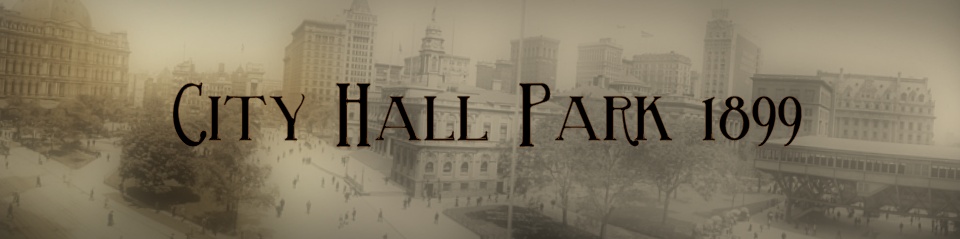
“Girls, As Boys, Eat Newsboy Turkey”

11-30-1906_NYTribune_thanksgivingscenes
Superintendent Rudolph Heig of the Brace Memorial Newsboys’ Lodging House, at No. 14 New Chambers street, had charge of a dinner for two thousand newsboys yesterday. Several Cherry Hill girls, in boys’ attire, were found at the tables. They told Superintendent Heig they had been playing vagabond all day and, being hungry, went to the dinner as newsboys. They were allowed to continue at the feast. The food left when the newsboys were full was given to five hundred hungry men from Park Row lodging houses.
Originally published in the New York Daily-Tribune on November 30, 1906.

The Hawaiian Star, “Newsboys’ Thanksgiving”

28 Thursday Nov 2013

Posted by cityhallpark1899 in Newspaper Articles

≈ Leave a comment

Tags

holidays, newsboys, Thanksgiving

Newsboys’ Thanksgiving

The rolling year brings round The Star Newsboys’ red letter day. It has been the annual custom for the Star to give a Thanksgiving feast to the little chaps who give such efficient help in distributing and selling the paper. The newsboy is a Star institution. He is of all nationalities, but is largely from the ranks of the Portuguese. That thrifty nationality is quick to earn a quarter when it sees a chance and its young lads follow in the footsteps of the heads of the families. But their example is followed close by energetic Hawaiian and part-Hawaiian lads.

The newsboys made quite a little income to add to the family funds. In times of great demand, some of them rake in from two and a half to three dollars, and most of them average from 50c. to $1 a day. The money so earned is spent wisely. It assists in feeding and clothing the little fellows. Many of them save up to buy a suit which generally appears at the Thanksgiving dinner.

The habit of earning and saving is thus early inculcated, and in many cases will last through life, laying the foundation for future success. The newsboys get a practical education which is of equal value to them as the literary education they obtain in the schools. And the newsboys are not ignorant, they know all about what is in the papers and keep up with the news of the world. They are moreover an institution of the city and make its streets look up to date. The boy may be noisy and he may be pushing, but he has in him the material that will make him a man and not a milksop. May The Star newsboys enjoy their Thanksgiving feast and holiday.

Originally published in The Hawaiian Star on November 21, 1899.
← Older posts
Newer posts →

Create a free website or blog at WordPress.com.

Privacy & Cookies: This site uses cookies. By continuing to use this website, you agree to their use.
To find out more, including how to control cookies, see here: Cookie Policy
  • Subscribe Subscribed
    • City Hall Park 1899
    • Join 55 other subscribers
    • Already have a WordPress.com account? Log in now.
    • City Hall Park 1899
    • Subscribe Subscribed
    • Sign up
    • Log in
    • Report this content
    • View site in Reader
    • Manage subscriptions
    • Collapse this bar
 

Loading Comments...